In Amman, the way home is often a stair
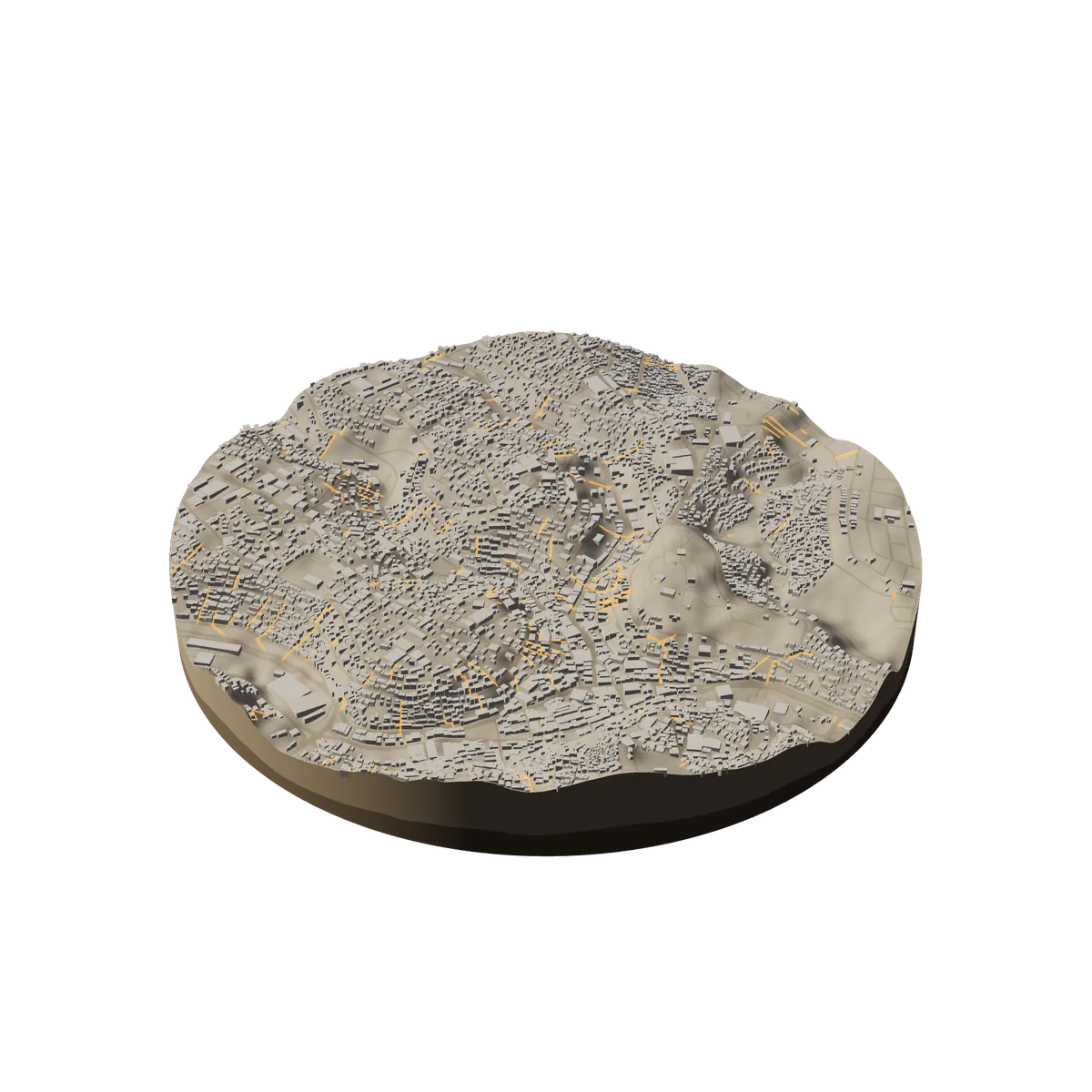
Tal’a is a concept for a public guide to the stairways that tie the city’s hills together. Choose a walk that goes up one way and comes down another, and follow it on a model of the middle of Amman: the hills from satellite data, every building from the open map, and the stairs lit.
A concept project by The Office Development. Not a real service.
Your browser couldn’t draw the model, so here is a still of it.
What we mean by a daraj
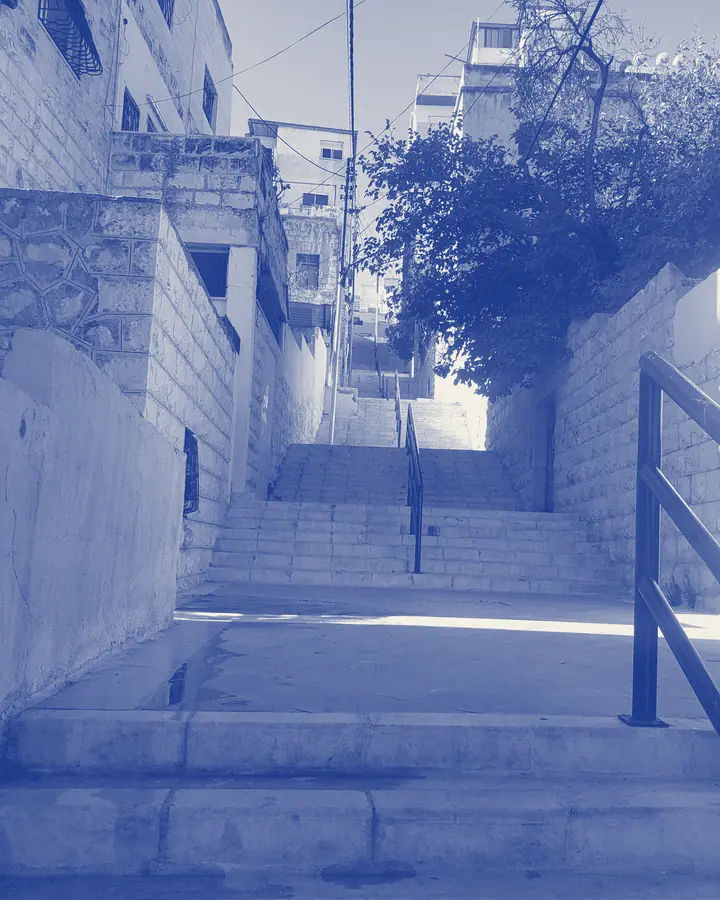
Amman started in the valley, by the water, and climbed. Houses went up the slopes in rows, streets ran along the hills one above another, and between them, wherever a straight line was shorter than the road, someone built a stair.
A daraj is that straight line: a public stairway between two streets, open day and night, belonging to everyone and looked after by whoever lives on it. Some are wide and lit and painted. Most are narrow: a handrail, a pot of mint on a step, school bags going down in the morning and bread coming up before lunch.
They are the city’s shortcuts, and its front steps. Tal’a is about walking them on purpose.
Every climb has its way down
Each walk is a loop. It climbs by one set of stairs, crosses the top of a hill and comes down by another, so you end where you started without walking the same step twice.
-
مشوار الكلحةAl-Kalha Loop
Al-Balad to Al-Luweibdeh by the city’s best-known stairway. The shortest of the four, and the one to start with if you have never climbed a daraj on purpose.
-
مشوار الرينبوRainbow Loop
The one for a late afternoon: up out of the market to Rainbow Street, and down the other side of the hill to Basman Street as the lamps come on.
-
مشوار القلعةCitadel Loop
The one for the view. From the square by the Roman Theatre up round the Citadel’s edge, with Jabal Amman across the valley the whole way.
-
المشوار الطويلThe Long Loop
Keep a morning for it: two hills, two climbs, and the valley between them twice.
How the town climbed out of the valley
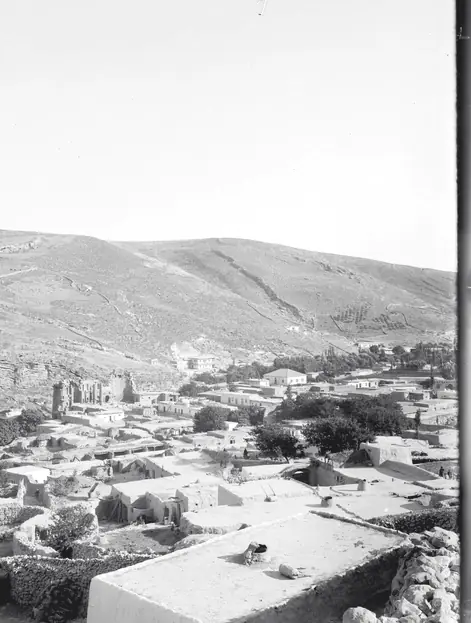
For a long time Amman was small and low: flat roofs gathered along the stream at the bottom of the valley, under bare hills. In the late nineteenth century Circassian families settled by the water, and in the twentieth the town became a capital and began to climb.
Building on the slopes made streets that follow the hills in parallel, one above another, and stairs were built to join them. Many of the old ones date from the 1920s and 30s, and the oldest are said to have been packed earth before they were stone. The busier the streets a stair joined, the wider and busier the stair.
They were never only shortcuts. Older Ammanis remember women sitting out on the steps in the morning over tea and embroidery, men gathering there in the evening, children playing, weddings and condolences held where a stair met the street, and that anyone who got thirsty on the way up could knock on any door and be given water.
As the city spread and more people drove, many stairs went quiet. They are filling up again. You can tell from the benches on the landings: whoever put them there expected people to stay.
A day on the steps
An ordinary September day, from the first bread run to the last glass of tea. The model turns to face south, so the sun crosses in front of you, and each hour hangs under the place the sun stood.
The first people down are going to work, or to the bakery. The stone is cold, and the light comes from the Citadel’s side of the sky.
School bags, in both directions, at speed.
Midday is a stair’s quiet hour. In summer the shaded flights get used and the open ones bake.
Late afternoon is for walking on purpose. The stairs that face west hold the last of the sun, and the cafés on Rainbow Street and in Al-Luweibdeh fill up.
The lamps come on, one stair at a time. Over a few flights hang rows of coloured umbrellas; on others the risers are painted, and the paint shows better going up than coming down.
The shutters are down on King Hussein Street, and the last people are climbing home from Al-Balad with tomorrow’s bread. The steps still hold the day’s heat; on one landing someone is finishing a glass of tea.